
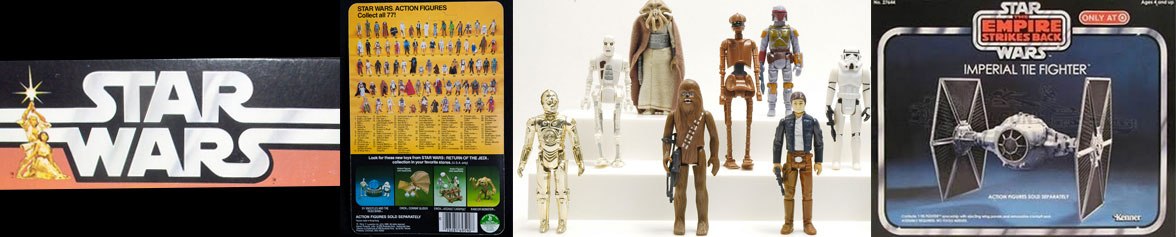
That old plastic bin in the parent’s garage might look like childhood clutter. Boxed action figures, dusty trading cards, maybe a Millennium Falcon missing pieces. Most people walk past this stuff. Some throw it out. Big mistake. That junk paid off someone’s mortgage last year. Twice.
The collectibles market went berserk. A 1977 Darth Vader trading card graded PSA 10 sold for $206,250. A double-telescoping Luke Skywalker figure hit thirty grand. The right piece in the right condition buys a new car. This guide covers where to buy, what paperwork matters, how to store stuff, and whether calling this an “investment” actually makes sense.
Where To Buy Without Getting Stung
New collectors fall for fake listings constantly. Avoid eBay for anything over $500 unless the seller has years of feedback.
- Auction houses: Heritage Auctions (Dallas), Hake’s (Pennsylvania), Prop Store (London). All publish condition reports and ownership history.
- Facebook groups: Star Wars Vintage Collectors (closed group, 45k members) vets members strictly.
- Physical shops: Celebrations, Comic-Con, local toy fairs. Bring a black light — it reveals touch-ups and resealed bubbles.
Each option has trade-offs. Auction houses charge fees but offer protection. Facebook groups save on commission but demand patience and trust-building before any serious deal.
The Paperwork That Proves Authenticity
No documentation means the item might as well be counterfeit. Graded items require certificates from CGC or AFA with matching serial numbers verified online before any money changes hands.
Autographs need Beckett or JSA stickers and matching certificates — no sticker, no deal unless buying directly from the celebrity at a signing event. Screen-used props demand notarised letters of authenticity from the original production source or a reputable prop house.
Without these papers, an item loses fifty to eighty percent of its value immediately. Serious collectors walk away from anything missing proper documentation.
Storage Mistakes That Destroy Value
Heat, sunlight, and humidity kill collectibles faster than almost anything else. Graded items belong in protective acrylic cases, kept between 18 and 22 degrees Celsius with humidity around forty-five to fifty percent.
Acid-free backing boards and sleeves protect cards and posters. Photographing every item with the current date provides proof for insurance claims.
Stacking heavy boxes on graded figures cracks cases and damages seals. Rubber bands and tape near paper items leave permanent marks. Basements and attics experience temperature swings that wreck everything over time.
Climate-controlled storage costs money. Losing a fifty-thousand-dollar figure because a shed got too hot costs considerably more.
Casinos And Collecting Share Strange DNA
The same universe that gave fans lightsabers also inspired a whole niche of online pokies. Players looking for no deposit bonus casino australia often find sci-fi slots like Space Wars, Star Bounty, and Battlestar Galactica.
An online casino fast payout platform lets players jump between space-themed games without hassle. Aussie punters searching for a fast withdrawal casino Australia can discover Star Wars-style pokies with bonus rounds and immersive graphics.
An instant withdrawal casino Australia platform makes the whole session run smoother. The real hook, though, sits in the theme itself — alien worlds, futuristic soundscapes, and that same buzz collectors get while tracking down a rare Kenner figure.
For fans juggling both hobbies, themed slots offer another way to tap into that universe without dropping thousands on a single prototype piece.
What Actually Drives Prices Up
Not every dusty figure from the 1980s turns into a fortune. Some stay worthless forever. Others skyrocket because of a few specific details that most people overlook. Understanding these details separates a lucky sale from a smart investment.
- Condition is king. A sealed figure on an unpunched card is worth 5-10x the same figure on a punched card. PSA 10 vs PSA 9 can mean a 50x difference.
- Original packaging keeps value. No box? No deal. Unopened adds 200-300% instantly.
- Rarity drives the ceiling. Low production numbers, recall items, prototype runs. If only 50 exist, price goes nowhere but up.
- Provenance adds premium. An item owned by a Lucasfilm employee or part of a famous collection? Add another zero.
- Timing catches the wave. New shows spike interest. Expect Mandalorian-related items to jump 20-30% before the 2026 film release.
All five factors feed into each other rather than working solo. A rare piece in average nick still struggles against a common item kept properly mint.
At the same time, a spotless mass-produced collectible with no history behind it usually falls short beside a rarer item carrying solid paperwork and provenance. The serious money lands when rarity, condition, and timing all click together at once.
Can You Call This An Investment?
Short answer: sometimes. Long answer: treat it as a hobby that might pay off.
The stock market averages 7-10% annually. Top-end Star Wars collectibles have done 15-25% since 2015. But factor in insurance, storage, authentication fees, auction commissions (15-25% of sale price), and time spent hunting.
Buy what feels right first. If the value goes up, bonus. Chasing profit without genuine passion usually leads to shocking decisions — overpaying, dodgy storage, skipped paperwork. The collectors who made the biggest coin started as fans first, investors second.