
For anyone who remembers blowing dust out of cartridges or angling a screen toward the nearest light source, handheld gaming has always been about more than convenience. Even today, when the Betting.co.uk guide to mobile gaming frames play around smartphones and constant connectivity, the habits behind portable gaming still trace back to chunky plastic consoles and simple buttons. The path from the original Game Boy to today’s Galaxy and iPhone models is less a single leap forward and more a series of practical design shifts that gradually changed what “playing on the go” means.
Seen through a retro lens, handheld gaming evolved by solving small, everyday problems. Each generation made games easier to carry, easier to access and easier to fit into spare moments, long before phones took over that role completely.
The Cartridge Era and the Birth of Portable Play
When Nintendo launched the Game Boy in 1989, it was not the most advanced handheld available. Competitors like the Atari Lynx and Sega Game Gear offered colour screens and stronger hardware. Nintendo focused instead on battery life, durability and affordability. That decision turned the Game Boy into a fixture of everyday life, not a fragile gadget.
Games such as Tetris and Pokémon helped define the era. They were simple to learn, easy to pause and perfect for short sessions, whether on school trips or in the back of a car. The technical limits of the hardware shaped design in lasting ways. Small screens demanded clear visuals. Limited storage encouraged straightforward mechanics. Those constraints produced a style of play that still feels familiar on modern phones and tablets.
By the late 1990s, portable gaming was no longer a novelty. It had become a normal part of how people filled waiting time, commutes and quiet evenings.
From Buttons to Touchscreens
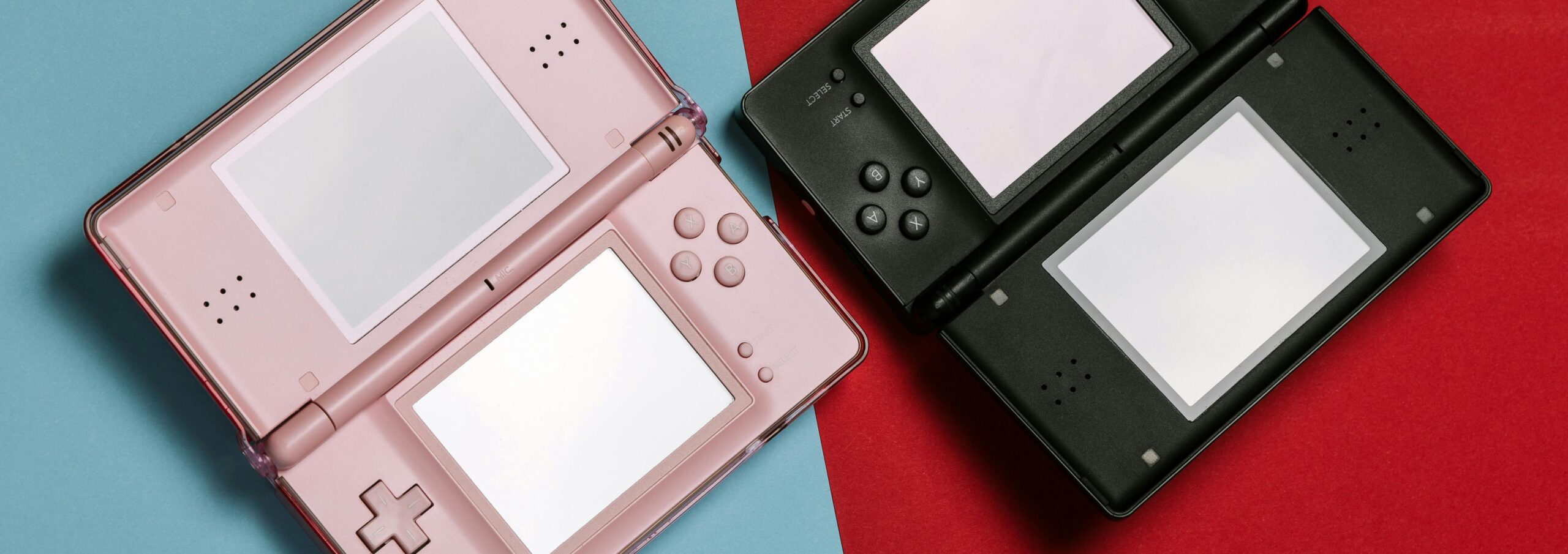
The early 2000s brought a transitional phase. The Game Boy Advance, Nintendo DS and Sony PSP pushed handhelds closer to home consoles in both power and ambition. Touch input, introduced to a wide audience through the DS, hinted at where things were heading. For a while, it seemed dedicated handhelds might simply keep evolving alongside living-room systems, rather than being replaced.
Smartphones changed that balance. Once games became just another app, the need for a separate gaming device faded for many players. One screen now handled calls, music, maps and entertainment. Gaming slipped naturally into the same space as everything else.
The scale of that shift is clear in the numbers. By 2025, mobile gaming is estimated to generate around $108 billion in revenue, making up roughly 55 percent of global gaming revenue. In the same year, the total games market is projected to approach $197 billion, with mobile play acting as one of its main drivers. Portable gaming did not disappear. It was absorbed into a device people already carried everywhere.
Always Online, Always in Your Pocket
Connectivity marks the clearest break from the cartridge era. Early handhelds were mostly solitary machines. Multiplayer meant a cable and someone sitting nearby. Today, cloud saves, live updates and online accounts are standard features across most mobile games.
This has changed how games are structured. Short sessions suit modern routines. Progress is designed to sync across devices. The network now matters as much as the hardware and sometimes more. Within this broader ecosystem, many types of interactive platforms coexist, from casual puzzle games to casino-style interfaces. References such as the Betting.co.uk guide to mobile gaming exist because phones have become a general gateway to many forms of digital play, not because one category defines the medium.
From a historical perspective, the key change is access. When gaming lives on a device that is always in a pocket and always connected, the audience is no longer limited by who owns a specific console or handheld system.
Why Retro Still Shapes Modern Mobile Games
Despite the technical leaps, modern mobile games still carry visible traces of their handheld ancestors. Pixel art has returned as a deliberate style choice rather than a limitation. Simple control schemes mirror the logic of early portable consoles. Short, repeatable gameplay loops echo the design of games once built around strict hardware limits.
This is not just nostalgia. The same ideas that worked on small, low-power devices also work on touchscreens and in short play sessions. Clear visuals read better on small displays. Straightforward mechanics fit fragmented playtime, whether someone is waiting for a bus or filling a few quiet minutes at home.
Handheld gaming did not vanish. It blended into something larger. The journey from cartridges to cloud saves is a story of how technology removed friction while keeping familiar habits intact. The screens changed, the market grew into an industry worth nearly two hundred billion dollars a year and the devices became multipurpose. Yet the core idea remains the same as it was in 1989: a game you can carry with you, ready to fill a spare moment, shaped as much by its limits as by its possibilities.